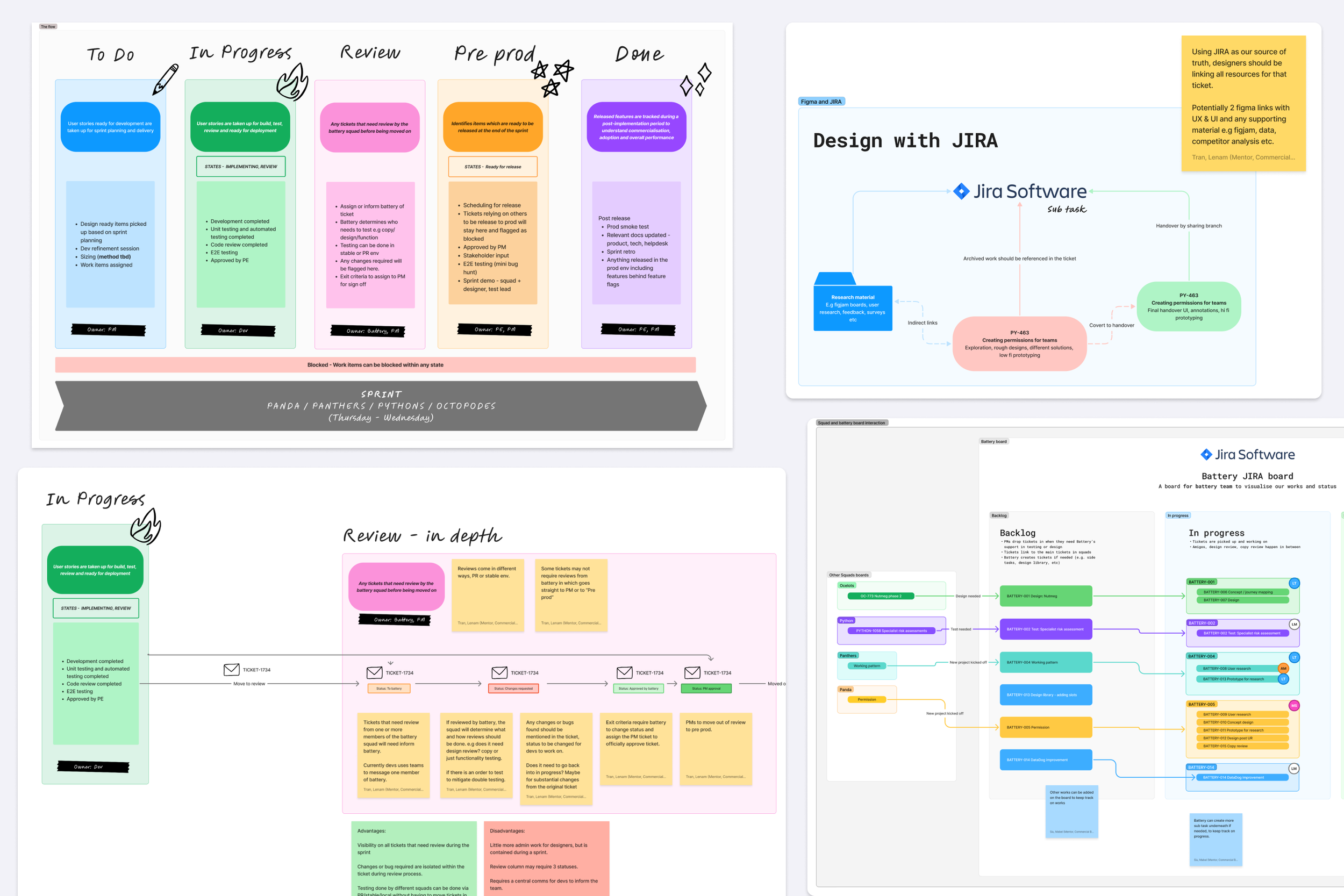
MentorDigital - Ways of working
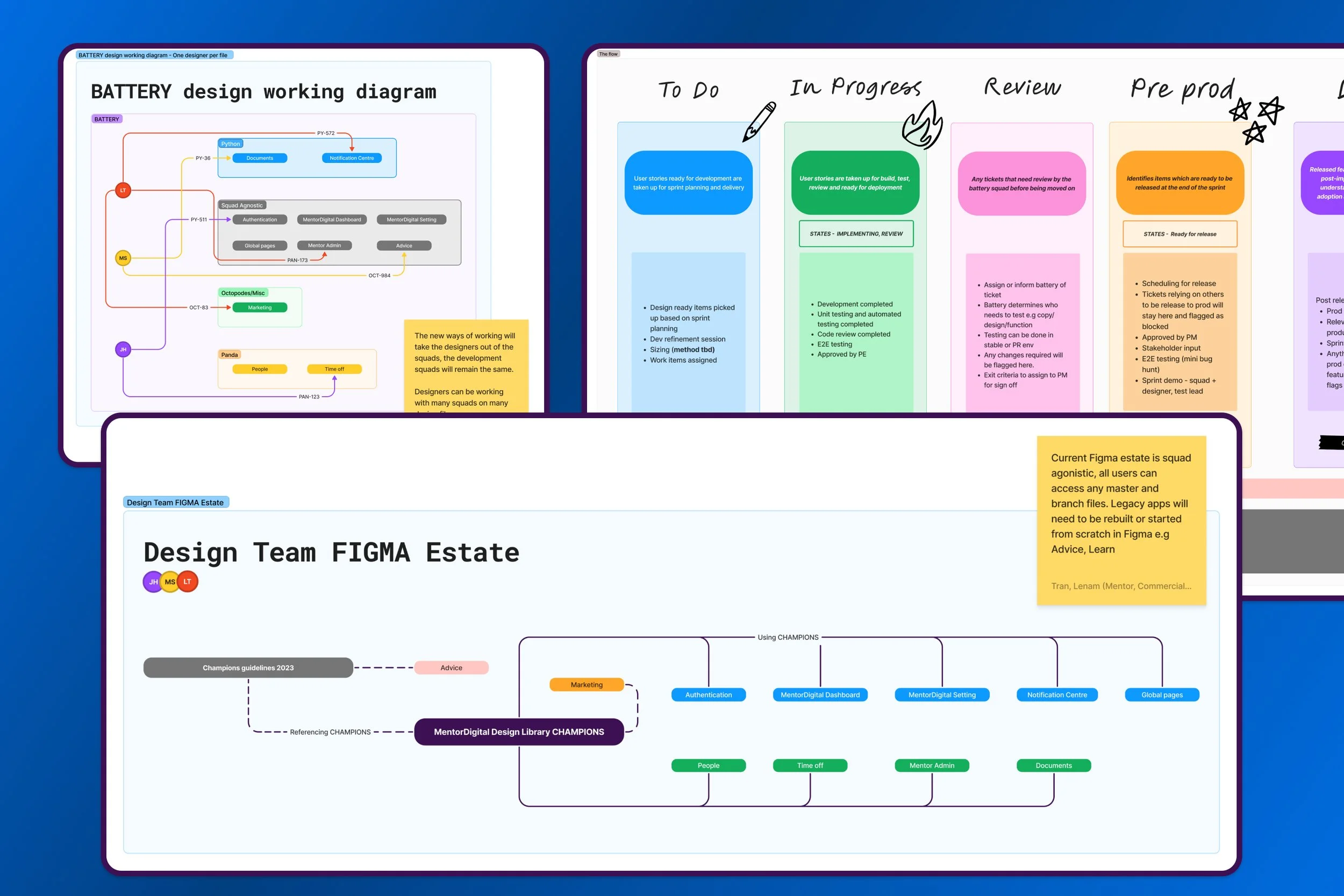
The problemAs the business grows from two to four development squads, demand for design support increases across multiple products. The challenge is to ensure all squads have access to design resources while maintaining knowledge sharing across the design team.
Current and proposed set up
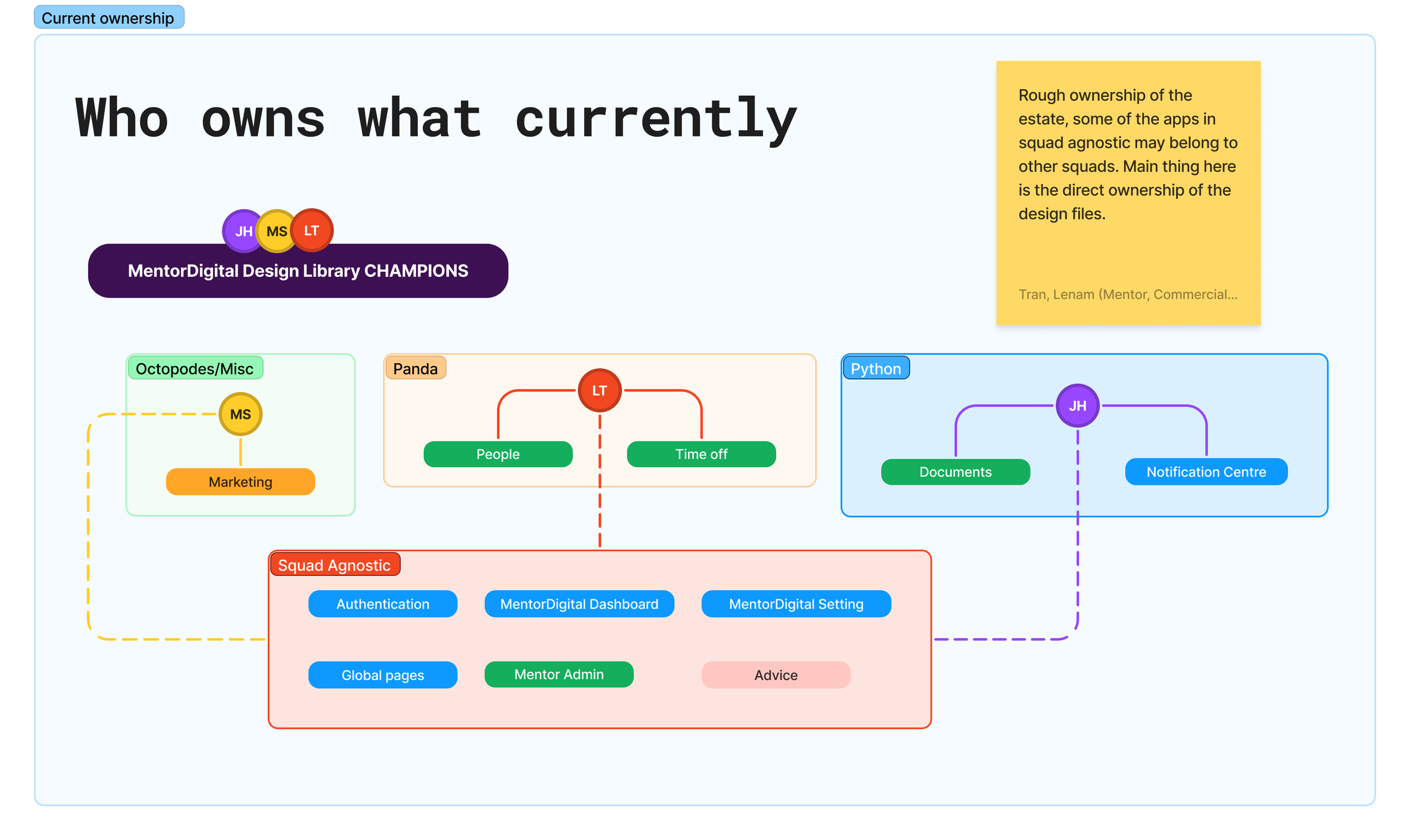
Current set up
The organisation was structured into two Product Squads and two Operations Squads.
Operations Squads maintained the existing platform, with design support mainly focused on bug fixes and urgent issues.
Product Squads were responsible for developing customer-facing products, with a designer working alongside a product owner and up to four engineers.
As the business grew, the number of squads increased faster than the design team. This stretched design capacity, made it harder to provide consistent support with designers dedicated to certain products.
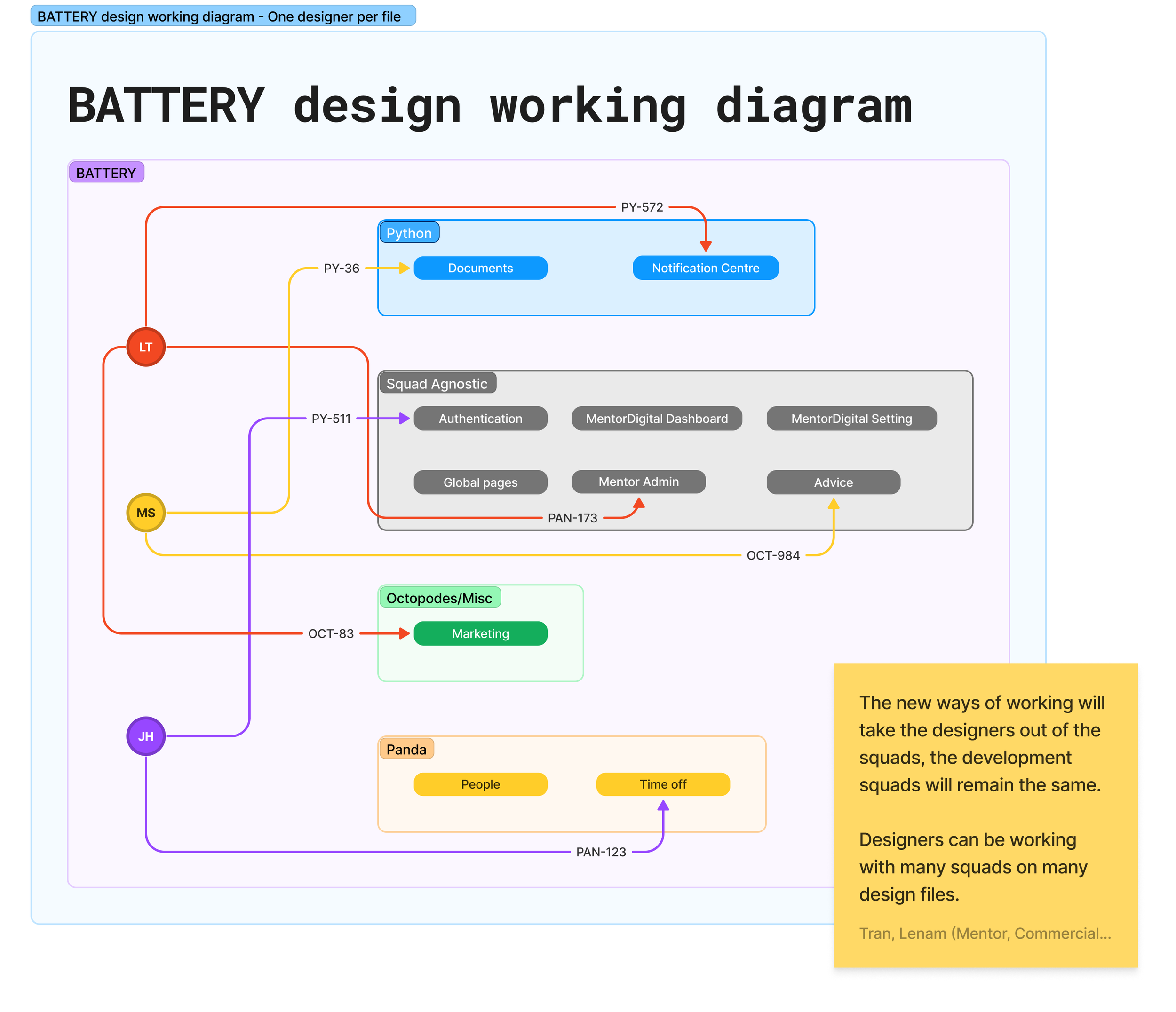
Proposed
To support future growth, a dedicated design operations squad was proposed, consisting of three designers, a testing manager, and a copywriter. Rather than embedding designers within individual product squads, all design requests would be routed through this team, allowing work to be allocated based on capacity, priorities, and expertise.
New ceremonies and processes would be introduced to create a smoother request workflow and provide clearer distinctions between project-based initiatives and sprint delivery work.
This approach would enable the design team to build knowledge across the entire product estate, reducing reliance on individual designers and ensuring a consistent standard of problem-solving and design quality across all squads.
How the year went
-
First quarter
The proposed way of working was expected to introduce some initial challenges as teams adapted to new processes and responsibilities.
Gradually it improved and the benefits of having different designers working on different products meant there was always capacity for design.
-
Second quarter
With a fully established design team, shared ways of working were introduced to improve collaboration and reduce overlap across the product estate.
Cross-product knowledge improved collaboration, reduced knowledge silos, and enabled the team to support work more effectively.
-
Third quarter
As project delivery accelerated and timelines became shorter, the demand on the design team increased significantly. With a greater volume of work and more urgent delivery expectations, maintaining visibility across all design became harder, particularly for smaller requests that sat outside of squad priorities.
-
Final quarter
Delivery pressures meant causing some ceremonies and processes to be skipped, the team continued to adapt and benefit from shared knowledge, flexible resourcing, and cross-product collaboration.
Overall, improved design capacity and much better design quality between products.
Improvements
Sprint or not to sprint?
Design work naturally fell into two categories: sprint-related delivery support and longer-term activities such as research, discovery, and usability testing. By clearly defining these work-streams, Product owners gained better visibility of design capacity, enabling more effective planning and prioritisation across teams.
Tracking work
To improve visibility and workload management, we introduced a dedicated JIRA board for the design team. This gave squads a central place to submit requests while enabling designers to track and prioritise all design work in one place.